Skip to content
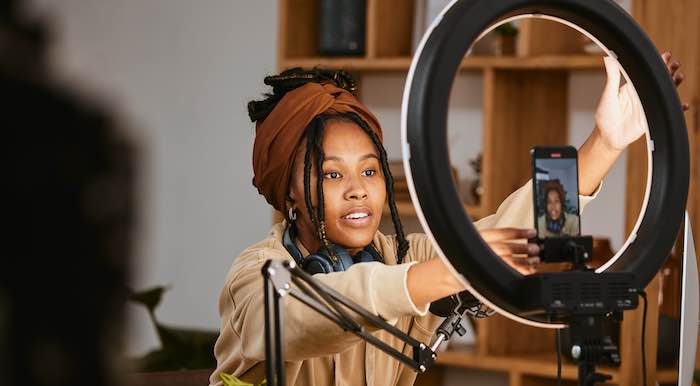
Young Africans, like other young people around the world, are increasingly turning to social networks and influencers to get information and obtain product recommendations, prioritizing authenticity, the proximity and frankness perceived in relation to traditional media. A similar study conducted in 2022 revealed that 75% of Gen Z and millennials follow influencers, and 50% trust them for advice, highlighting a general trend towards trusting these personalities.
Digital Influence in Africa: A Revolution in Progress
The rise of influencers in Africa is based on several factors:
- The explosion of Internet access: Today, nearly 570 million Africans are connected, with a strong adoption of social networks.
- A young and ultra-connected audience: More than 60% of the African population is under 25 years old and consumes digital content as a priority.
- The rise of mobile-first: 75% of Africans access the Internet via their smartphone, facilitating influencer marketing.
According to a study by Hootsuite and We Are Social (2024), 65% of young Africans trust influencer recommendations more than traditional advertisements.
1. Influence as a New Communication Lever
Africa is witnessing a profound transformation in how communication is conceived and delivered.
Influencers, from digital creators to media personalities and thought leaders, now play a central role in shaping narratives, building brand image, and connecting communities.
Driven by the digital revolution, they have become powerful reputation builders, blending authenticity, visibility, and impact in the Pan-African communication ecosystem.
2. Growth Fueled by Youth and Connectivity
With one of the world’s youngest and most connected populations, Africa has emerged as a fertile ground for digital creativity.
Platforms such as Instagram, TikTok, YouTube, and X (formerly Twitter) empower a new generation of African voices influencing consumption habits, civic conversations, and cultural trends.
This dynamic environment has given rise to an organized influencer ecosystem, agencies, platforms, and partnerships bridging creators and brands.
3. From Visibility to Credibility
The success of influencer marketing in Africa is no longer measured by reach alone.
Today, credibility defines influence. Brands seek authentic voices that embody values, engage communities meaningfully, and align with long-term reputation strategies.
Micro-influencers are gaining prominence, offering higher engagement rates and more genuine connections with their audiences.
4. Impact on African Brand Reputation
Influencers have become key partners in shaping brand perception and reputation.
Beyond product promotion, they help craft Pan-African narratives, elevate “Made in Africa” initiatives, and showcase the creativity driving local economies.
African companies are increasingly adopting integrated communication approaches, combining PR, digital storytelling, and influence marketing, to build stronger, more trusted brands.
5. Toward a Professionalized and Ethical Industry
As the influence sector matures, it brings the need for structure and ethics.
Codes of conduct, training programs, and professional agencies are emerging to ensure transparency and responsibility in brand collaborations.
This evolution signals a move toward a sustainable, credible, and professional influencer ecosystem, one that strengthens both communication and reputation across Africa.
Dominant social media platforms and their uses
The most used social networks in Africa are Facebook, WhatsApp, Instagram, and TikTok. Other platforms such as LinkedIn and X (Twitter) are also popular, especially for professional uses or for news. Facebook remains dominant, but WhatsApp is widely used for messaging, while TikTok quickly gains followers, especially among young people.
- WhatsApp: Often at the forefront in terms of users, it is praised for its simplicity and ability to operate over weaker data connections, serving primarily for messaging and communication.
- Facebook: Despite the strong growth of other platforms, Facebook remains the largest and most used social media platform on the continent.
- TikTok: Its growth is very fast, becoming the second most used network in sub-Saharan Africa after Facebook. It is mainly used for entertainment.
- Instagram: Very popular, it is used to follow trends, influencers and the lifestyle of celebrities, as well as for sharing photos.
- LinkedIn: Specifically used for professional networking and job searching.
- X (Twitter): Primarily used for real-time news and discussions.
The Sectors Most Impacted by Digital Influence
- Fashion and Beauty: The New Digital Showcase
- Gastronomy and Food Business: The rise of Food Influencers
- Finance and Business: Influence on Entrepreneurship
Types of Influencers
- Nano-influencers: 1,000 to 10,000 followers
- Micro-influencers: 10,000 to 100,000 followers
- Macro-influencers: 100,000 to one million followers
- Celebrity or Mega-influencers: over one million followers
Why Do Brands Work With Nano-Influencers?
Because nano-influencers tend to have more genuine connections with their followers, they offer promising opportunities to generate cheap content that earns high engagement rates. Brands are tapping into these networks and enjoying these benefits as a result.
Benefits of Working With Nano-Influencers
- More authentic marketing
- Higher engagement
- Lower cost
- Faster content production
Nano-influencers have fewer than 10,000 social media followers. Because they tend to be more niche and authentic than more popular influencers, nano-influencers’ product recommendations are often highly trusted.
Because nano-influencers tend to have more genuine connections with their followers, they offer promising opportunities to generate cheap content that earns high engagement rates. Brands are tapping into these networks and enjoying these benefits as a result.
Influence in Africa is no longer just a digital trend, it is a strategic pillar of modern communication.
By shaping opinions, driving engagement, and amplifying authentic voices, influencers are redefining how brands, institutions, and citizens connect across the continent.
Their impact will continue to shape Africa’s communication and reputation landscape for years to come.This article is part of an ongoing reflection on communication, influence, and reputation in Africa, as covered by Africa O’Clock